Showing posts with label Articles of Interest. Show all posts

Thursday, June 13, 2013

Blog, portal owners must reveal identities: Najib- My Thoughts…

Source: http://www.asiaone.com/News/AsiaOne%2BNews/Malaysia/Story/A1Story20130613-429419.html

By R. Sittaparam
New Straits Times
Thursday, Jun 13, 2013

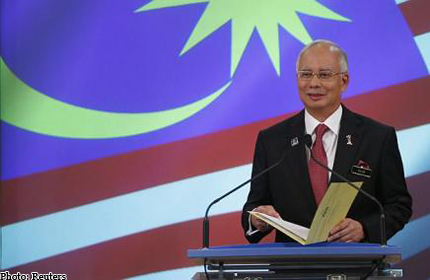
KUALA LUMPUR - Malaysia will not emulate Singapore's move requiring blogs and news portals to be licensed, but will instead opt for self-regulatory measures that make it necessary for blog and website owners to reveal their identities, said Prime Minister Datuk Seri Najib Razak.

He said in handling the challenges of a mature nation, the government would ensure social media practitioners are more responsible in disseminating information.

He was speaking at the Malaysian Journalists Night 2013 and Malaysian MPI-Petronas Media Awards 2012 here last night.

Najib said the government would study the proposal for blog and news portal owners to provide information about their identities in their websites.

"No more anonymous writers, as is practised now. This is to ensure that information presented isn't considered libel (fitnah), which can jeopardise unity. It is also to ensure that writers are responsible and accountable for what they write."

He said the authorities would take action against owners of blogs and portals who failed to do so.

Najib said under the Communications and Multimedia Act and MSC Malaysia Bill of Guarantees, there would be no filtering of the Internet.

However, through the implementation of self-regulatory measures, action would be taken against blog or portal owners who spread false and slanderous information, he added.

"The government, for instance, will not move to license news portals, as what has been done in a neighbouring country.

"However, to safeguard national harmony, the government will enforce laws to ensure that anyone attempting to create factionalism using race, religion, language or try to belittle the royal institution or subvert the democratic parliamentary system, will face action."

He said the country's media and news organisation landscape had evolved tremendously, with print and electronic media being complemented by online media.

"Media democracy and the freedom of expression have become a reality. We have witnessed the full use of new and traditional media in the 13th General Election."

Najib said the dissemination of false, slanderous and provocative information that incited hate in social media, which was prevalent during the polls by those who called themselves journalists, did not benefit anyone.

"This will bring a negative effect to the country's future, if it is allowed to persist."

He said it was undeniable that issues of democracy and freedom of speech were being debated by the people, which had resulted in a never-before-seen consequence called the "butterfly effect".

"The demand for freedom of speech is not only due to globalisation, but is also stimulated by greater access to the Internet and improved socio-economic and education status.

"Freedom of speech is important and will bring positive effects to the country's development, but any information presented to the masses must be accurate."

Najib said he believed that the key to success was for the people to reflect and ask themselves whether freedom of speech was suitable for their identities as Malaysians and moral values.

"It is not wrong to disagree and have different opinions. However, do we need for such differences to create distrust among us, which is against our culture?

"For democracy to function, the people and media practitioners must hold firm to their moral values."

Najib said differences in opinions must be within people's identities as Malaysians, and they must not allow it to make them distrustful.

He said being a developing country, Malaysia must also be creative and innovative in managing these new realities as the middle class had become more assertive in its demands for more discussions on government policies.

Najib urged media practitioners to highlight important issues such as unity and development, and that freedom of speech must be practised ethically and responsibly. "The people's voices and opinions are crucial in our aim to be a developed nation by 2020."

====================================================================

My Personal View

I am against this ruling. Why should we have to register and reveal our true identity? To reveal ourselves to spam, identity thefts and so on? This is crazy.

If you really want to go after those that posted racial remarks (mostly by Pro-BN Cyber Troopers) go ahead. There are many ways to do that. You can track the IP usage to ISP, and from ISP to their office/household.

You can get cooperation from web/blog hosting company to help you trace. You can also trace from cybercafes.

Having bloggers to register our identity is just crazy. I will not support this.

Saturday, July 30, 2011

Configure a USB flash drive to be a Windows 7 installation platform

Source: http://www.techrepublic.com/blog/window-on-windows/configure-a-usb-flash-drive-to-be-a-windows-7-installation-platform/1446?tag=nl.e064
Author: Greg Shultz, July 27, 2011, 12:25 AM PDT

In a recent 10 Things blog, “10 Cool Things You Can Do with a USB Flash Drive,” I presented 10 tasks that you can perform with a flash drive, including booting an operating system. However, I have since discovered a technique on the Microsoft TechNet Magazine site that describes how you can use a USB flash drive to install Windows 7.

This technique is very cool for two reasons: First, a flash drive is much more responsive than an optical drive, since it doesn’t rely on physically moving components, so the installation procedure will be faster. Second, it provides an easy way to install Microsoft Windows 7 on a system that doesn’t have a DVD drive, such as a netbook.

Since this technique would be a valuable addition to the 10 Things list as well as to users planning on installing Windows 7 on a netbook or who want to be able to quickly and easily install Windows 7, such as the Family Pack, on multiple systems without having to mess around with a DVD, I thought that I would examine the technique.

In this edition of the Windows Vista and Windows 7 Report, I’ll show you how to use the DiskPart utility to configure a bootable USB flash drive that you can then use to install the Microsoft Windows 7 operating system.

This blog post is also available in PDF format in a free TechRepublic download.

Getting started

Of course, in order to employ this technique you’ll need a USB flash drive that is big enough to hold the contents of the Windows 7 DVD. The Windows 7 RC DVD is about 2.5GB, and you can expect that the RTM DVD will be at least that if not more. For my test system I am using a 4GB USB flash drive.

Keep in mind that the procedure we will use will completely reformat the USB flash drive. So you want to make sure that you back up any data that you have on the drive before you begin.

The systems on which you want to install Windows 7 via the USB flash drive have to be able to be configured to boot from a USB drive. Most new systems have the capability to boot from a USB flash drive, and the operation can usually be configured in the BIOS or by simply pressing a certain key during bootup. You’ll need to check your specific hardware in order to be sure.

Using the DiskPart utility

As you may know, the DiskPart utility is a command-line version of the Disk Management snap-in and is designed to allow you to manage disks, partitions, or volumes from within scripts or directly from a command prompt. We can use the DiskPart command in Windows Vista or in Windows 7 to configure a USB flash drive to be a bootable device. (Keep in mind that Windows XP’s DiskPart command is unable to create a bootable USB flash drive.)

To begin, connect your USB flash drive to a computer on which you will be preparing the drive. For my example, I’ll be using a Windows Vista system.

Now, locate the command Prompt shortcut on the Start menu, right-click on it, and select the Run as Administrator command. Then, respond appropriately to the UAC. You can now launch the DiskPart utility by typing DiskPart on the command line. You’ll then see the DISKPART prompt, as shown in Figure A.

Figure A
DiskPart has its own command-line environment complete with a special prompt.
Now that you’re in the DiskPart environment, you’ll need to locate the USB flash drive using the List Disk command. As you can see in Figure B, the List Disk command has identified my USB flash drive as Disk 5. I can verify that my USB flash drive is indeed Disk 5 by checking the Size column, which lists the size as 3906MB, which is roughly 4GB.
Figure B
Using the List Disk command displays all the disks in the system.
(If you have difficulty identifying your USB flash drive using the List Disk command, you can try the List Volume command, which will provide the drive letter as well as the label, both of which can help you to identify the drive.)

Once you identify the drive number of your USB flash drive, you will need to set the focus of the DiskPart environment on that disk. (This is an extremely important step–Make sure that you select the correct drive or you could accidentally destroy valuable data!) On my example, the USB flash drive is Disk 5, so I will use the command Select Disk 5, as shown in Figure C.

Figure C
To shift the focus over to the USB flash drive you’ll use the Select Disk command.
Now that your USB flash drive has the focus, you need to remove all the partition or volume formatting information from the disk. To do that, you’ll use the Clean command. The Clean operation should occur rather quickly. When it is done, you will see a success message like the one shown in Figure D.
Figure D
In order to start with a clean slate, you’ll use the Clean command to remove all partition and volume information from the USB flash drive.
You’ll now use the Create Partition Primary command to create a primary partition on the disk. After you create the partition, you will see a success message and the focus will automatically shift to the new partition. You’ll use the Active command to mark the partition as active, as shown inFigure E. Marking the partition as active will essentially allow the BIOS to recognize that the partition is a valid bootable system partition.
Figure E
Using the Create Partition Primary and the Active commands, you’ll create a bootable partition on the USB flash drive.
With the partition created and active, you’re now ready to quickly format the drive and set up the FAT32 file system using the Format fs=FAT32 quick command. (While you could format the drive as NTFS, the typical way to format a USB flash drive is to use FAT32.) Once the drive is formatted, you’ll use the Assign command, as shown in Figure F, to allow the drive to be assigned a drive letter.
Figure F
To complete the preparation, you’ll format the drive and assign it a drive letter.
The USB flash drive is now ready. At this point, you can use the Exit command to exit the DiskPart environment and then close the Command Prompt window.

Copying the Windows 7 files

Copying the Windows 7 files is easy. Just open Windows Explorer, access the Windows 7 DVD, select all the files and folders, and then drag and drop them on the USB flash drive icon, as shown in Figure G. Keep in mind that the copy operation will take a little while to complete.
Figure G
Once the USB flash drive is ready to go, you can copy all the files and folders from the Windows 7 DVD to the newly prepared bootable drive.

Installing Windows 7 from the USB flash drive

With the contents of the Windows 7 DVD on a bootable USB flash drive, installing the operating system is a snap. Just boot the system from the USB drive and the installation procedure will begin as it normally would, as shown in Figure H. However, the installation procedure will actually run quicker off a USB flash drive since it doesn’t contain any physically moving components.
Figure H
Once the system boots from the USB flash drive, the Windows 7 installation will begin as normal, but it will actually run faster.

Saturday, May 28, 2011

嫁給工程師真好!

Original Source: http://www.facebook.com/notes/alex-chou/%E5%AB%81%E7%B5%A6%E5%B7%A5%E7%A8%8B%E5%B8%AB%E7%9C%9F%E5%A5%BD/420639237197

Author: Alex Chou

當你選擇丈夫時,請先把工程師與以下的職業作一番比較︰

一.醫生 幾乎所有女人都喜歡追求當醫生的。所以不要期望你們的婚姻能持續五年以上,因為早晚有一天,他會跟某個護士小姐跑掉的,或是被一個假裝生病的年輕女人勾引走。這種倒霉事還往往發生在你已經為他生了幾個小孩的時候。你的工程師丈夫不會發生這種事。因為他忙得連見你的時間都很少,更別說有機會跟他工作以外的其它女人接觸了。

二.律師 你真認為你可以和一個靠撒謊謀生的人能保持誠實、信任的關係嗎?而你不用擔心你的工程師丈夫,他笨拙的社交能力將無法掩蓋他的謊言。跟律師結婚還有一個危險,那就是離婚時,官司往往他打贏,你將一無所有。

三. 推銷員 他的可信程度比律師還差。另外,他還要常常離家出差,或是到處上課和開會,和那些有著同樣可信度的人混在一起。如果有一天你被邀請出席聞所未聞的千人大派對時,你不要感到驚訝。而你的工程師丈夫卻被公司整天關在那叫做"小隔間"的鳥籠裡,除了回家,那裡都去不了。

四.老師 男人當教師的唯一目的是,他能整天被一大群青春貌美,又盲目崇拜他的女學生團團圍住。于是,他很快就會被抓到監獄,那時你只得琵琶別抱另尋郎。其它危險的職業,如消防員,建築工人等。如果你嫁給這種人,他即便沒有因意外事故死亡,也很可能會因脊椎受損而導致性無能。要命的是,那時正值你的性需求尖峰期。而你那位工程師丈夫要面對的唯一危險是,由於整日盯著計算機,視力將會衰退。這危險其實對 你有好處︰當你變老時,他不會注意到,因為他的視力模糊了。但他的記憶力卻非常好,仍記著你們初次相會時你那年輕美麗的容貌。假如你擔心他在望著別的年輕女人,對他說︰「親愛的,你干嘛老瞧著她呀?」他會很誠實地回答說︰「我根本無法看清那女人的臉﹗」

-----嫁給工程師的好處 [反証版]----

1.男工程師不修邊幅,所以家裡不用保持太整潔。

2.男工程師很難有女朋友,所以他會對目前的這個死心塌地。

3..男工程師呆板無趣,根本不活在人的社會中,只活在圖表的世界裡, 所以你不必花心思去取悅他。

4.男工程師視修理東西為娛樂,在你生氣時大可在他面前摔東西出氣,他會很高興的幫你修好又不必花錢。

5.男工程師IQ都不低,所以嫁給他后可以生一堆這樣的兒子考一堆的滿分讓你去跟街坊炫耀。

6.男工程師待在研究室的時間比在家裡多,所以嫁給他以後還是很自由。

7.男工程師口才太差根本講不過你,所以你可以盡情用言辭凌辱他。

8.男工程師最講求【理】,所以你有理的話他服你;他如果有理,你就不要跟他講理,他對你一點辦法也沒有。

9.男工程師薪水不錯,自己不會娛樂不怎么花錢也很少女人花他錢,所以你可以大大方方的花他錢,並且告訴他這是促進經濟繁榮,他做出來的東西才有人買。

10. 男工程師除了以上之外毫無魅力可言,所以嫁給他不用擔心他有外遇。

Tuesday, February 8, 2011

The Price of Malaysia's Racism

Slower growth and a drain of talented citizens are only the beginning.

Source: http://online.wsj.com/article/SB10001424052748704422204576129663620557634.html#articleTabs=article
Date: FEBRUARY 8, 2011
Author: John R. Mallot, U.S. Ambassador to Malaysia, 1995-1998.

Malaysia's national tourism agency promotes the country as "a bubbling, bustling melting pot of races and religions where Malays, Indians, Chinese and many other ethnic groups live together in peace and harmony." Malaysian Prime Minister Najib Tun Razak echoed this view when he announced his government's theme, One Malaysia. "What makes Malaysia unique," Mr. Najib said, "is the diversity of our peoples. One Malaysia's goal is to preserve and enhance this unity in diversity, which has always been our strength and remains our best hope for the future."

If Mr. Najib is serious about achieving that goal, a long look in the mirror might be in order first. Despite the government's new catchphrase, racial and religious tensions are higher today than when Mr. Najib took office in 2009. Indeed, they are worse than at any time since 1969, when at least 200 people died in racial clashes between the majority Malay and minority Chinese communities. The recent deterioration is due to the troubling fact that the country's leadership is tolerating, and in some cases provoking, ethnic factionalism through words and actions.

For instance, when the Catholic archbishop of Kuala Lumpur invited the prime minister for a Christmas Day open house last December, Hardev Kaur, an aide to Mr. Najib, said Christian crosses would have to be removed. There could be no carols or prayers, so as not to offend the prime minister, who is Muslim. Ms. Kaur later insisted that she "had made it clear that it was a request and not an instruction," as if any Malaysian could say no to a request from the prime minister's office.

Similar examples of insensitivity abound. In September 2009, Minister of Home Affairs Hishammuddin Onn met with protesters who had carried the decapitated head of a cow, a sacred animal in the Hindu religion, to an Indian temple. Mr. Hishammuddin then held a press conference defending their actions. Two months later, Defense Minister Ahmad Zahid Hamidi told Parliament that one reason Malaysia's armed forces are overwhelmingly Malay is that other ethnic groups have a "low spirit of patriotism." Under public pressure, he later apologized.

The leading Malay language newspaper, Utusan Melayu, prints what opposition leader Lim Kit Siang calls a daily staple of falsehoods that stoke racial hatred. Utusan, which is owned by Mr. Najib's political party, has claimed that the opposition would make Malaysia a colony of China and abolish the Malay monarchy. It regularly attacks Chinese Malaysian politicians, and even suggested that one of them, parliamentarian Teresa Kok, should be killed.

malott
Ethnic Indian Malaysians protesting in 2007, Associated Press

This steady erosion of tolerance is more than a political challenge. It's an economic problem as well.

Once one of the developing world's stars, Malaysia's economy has underperformed for the past decade. To meet its much-vaunted goal of becoming a developed nation by 2020, Malaysia needs to grow by 8% per year during this decade. That level of growth will require major private investment from both domestic and foreign sources, upgraded human skills, and significant economic reform. Worsening racial and religious tensions stand in the way.

Almost 500,000 Malaysians left the country between 2007 and 2009, more than doubling the number of Malaysian professionals who live overseas. It appears that most were skilled ethnic Chinese and Indian Malaysians, tired of being treated as second-class citizens in their own country and denied the opportunity to compete on a level playing field, whether in education, business, or government. Many of these emigrants, as well as the many Malaysian students who study overseas and never return (again, most of whom are ethnic Chinese and Indian), have the business, engineering, and scientific skills that Malaysia needs for its future. They also have the cultural and linguistic savvy to enhance Malaysia's economic ties with Asia's two biggest growing markets, China and India.

Of course, one could argue that discrimination isn't new for these Chinese and Indians. Malaysia's affirmative action policies for its Malay majority—which give them preference in everything from stock allocation to housing discounts—have been in place for decades. So what is driving the ethnic minorities away now?

First, these minorities increasingly feel that they have lost a voice in their own government. The Chinese and Indian political parties in the ruling coalition are supposed to protect the interests of their communities, but over the past few years, they have been neutered. They stand largely silent in the face of the growing racial insults hurled by their Malay political partners. Today over 90% of the civil service, police, military, university lecturers, and overseas diplomatic staff are Malay. Even TalentCorp, the government agency created in 2010 that is supposed to encourage overseas Malaysians to return home, is headed by a Malay, with an all-Malay Board of Trustees.

Second, economic reform and adjustments to the government's affirmative action policies are on hold. Although Mr. Najib held out the hope of change a year ago with his New Economic Model, which promised an "inclusive" affirmative action policy that would be, in Mr. Najib's words, "market friendly, merit-based, transparent and needs-based," he has failed to follow through. This is because of opposition from right-wing militant Malay groups such as Perkasa, which believe that a move towards meritocracy and transparency threatens what they call "Malay rights."

But stalling reform will mean a further loss in competitiveness and slower growth. It also means that the cronyism and no-bid contracts that favor the well-connected will continue. All this sends a discouraging signal to many young Malaysians that no matter how hard they study or work, they will have a hard time getting ahead.

Mr. Najib may not actually believe much of the rhetoric emanating from his party and his government's officers, but he tolerates it because he needs to shore up his Malay base. It's politically convenient at a time when his party faces its most serious opposition challenge in recent memory—and especially when the opposition is challenging the government on ethnic policy and its economic consequences. One young opposition leader, parliamentarian Nurul Izzah Anwar, the daughter of former deputy prime minister Anwar Ibrahim, has proposed a national debate on what she called the alternative visions of Malaysia's future—whether it should be a Malay nation or a Malaysian nation. For that, she earned the wrath of Perkasa; the government suggested her remark was "seditious."

Malaysia's government might find it politically expedient to stir the racial and religious pot, but its opportunism comes with an economic price tag. Its citizens will continue to vote with their feet and take their money and talents with them. And foreign investors, concerned about racial instability and the absence of meaningful economic reform, will continue to look elsewhere to do business.

--------------------------------------------------------

Now Malaysia is featured on Wall Street Journal.. One Malaysia.. do something.. don’t just talk, but do something.. take some action.. positive actions to improve the situation. The more you suppress, the worst it becomes.

Friday, February 4, 2011

Our Politician Approves of Corruption in Egypt Publicly?!

It is now 5:13pm, February 4th, 2011 and i came across some very interesting twits, from one of our great nation’s future leaders, and youth of our UMNO party (UMNO Youth).

khalid Samad

Please have a look at the last 3 twits by Khalid Samad. Allow me to translate.

Posted 26 minutes ago, “UMNO Youth is afraid Egypt will be controlled by China, end up just like Singapore. Request Arabian Egypt provide support to Mubarak. Bribery, Cruelty is alright. Don’t give chinese power!”

Posted 32 minutes ago, “Mubark’s assets RM120 billion. Pakatan Rakyat (opposition coalition party) says is bribery money and Mubark is a national thief. UMNO Youth says now Mubarak is able to get contracts, commissions, AP & Licensing.”

Is this the mindset of our UMNO Youth? the future leaders of UMNO and Barisan Nasional?

To approve of corruption and bribery just to deny chinese being the leaders of the nation? And to prevent becoming Singapore (whats wrong with Singapore? they seem to be doing fine).

I am trully saddened by this news. I am a strong supporter of Barisan Nasional, even in the last election because the representative in my area (MCA) really did a good job in our area. But looks like I have been mistaken. If this is the future of Malaysia, the future is dark indeed.

Indirectly, one will see, that UMNO Youth will do anything to prevent other races to come to power, including corrupted officials. This is a sad day for Malaysia.

Our Prime Minister has been propagating 1Malaysia, wanting our nation to unite and put racial & religion barriers behind us. But is he really serious about this or is he just talking without plans to put things in motion. If he is really serious, he would have cleaned up his own party, as the leader of UMNO & Barisan Nasional.

All this time, I do not see anything done towards 1Malaysia. yes, we have nice things such as Malaysia Day, 1Malaysia Clinics. But all these have nothing to do with Racial Unity & Religion.

If the goverment wants Malaysia to be strong, they have to walk the talk and clean up his own party.

This is all I have to say. I will continue to watch and observe comments and actions by our dear politicians.

Wednesday, December 1, 2010

Five tips for getting a good price on a laptop


As a freelance technical writer, I buy an astronomical amount of computer equipment each year. Of course, since I have to pay for all of that equipment out of my own pocket, I am always looking for a bargain. Over the years, I’ve figured out several tricks for getting good prices on computer equipment. Here are a few things I’ve learned about getting a good price on a laptop.

1: Stay away from retail stores

If you want to get a good deal on a laptop, stay away from major electronics retailers. I don’t want to name names, but there is one major electronics store within half an hour’s drive of my house. I have noticed that its prices are always the same as the MSRP listed on the Internet. Even the store’s sale prices are more expensive than what you would pay if you were to buy the same laptop online.

Of course, the price isn’t the only reason I recommend avoiding the major electronics stores. Things like high pressure sales tactics and upcharges for things I don’t want (such as extended warranties, setup, software suites, and delivery) are enough to drive me insane. Unless I need a computer immediately I avoid the electronics stores at all costs.


2: Decide what’s important to you

If you have to have the latest and greatest laptop, you’re going to end up paying a premium price for it. However, if you don’t absolutely have to have the best, you can save big bucks by compromising on a few features. You may also find that it is cheaper to upgrade a laptop than to buy one with everything you need.

For example, a few years ago, I needed a laptop for a project I was working on. The only real requirement was that I had to have 4 GB of RAM. At the time, laptops with that much memory were really expensive. I was able to save a fortune by buying a 1 GB laptop and then buying the memory for it separately.

Here are some other ways you can save money:

  • Buy last year’s model.
  • Find a laptop that comes with Linux instead of Windows.
  • Buy a comparable system from a less expensive manufacturer.


3: Shop the online outlets

Most of the major electronics stores have online outlet stores where you can purchase open box items at a discount. A lot of PC manufacturers have similar online outlets that sell refurbished computers.

Even though some people may look down on those who buy refurbished systems, I have saved an absolute fortune by purchasing refurbished laptops. Not every computer I buy is refurbished. But if I plan to use a computer only as a lab machine, I have no problem with buying refurbished hardware.


4: Comparison shop

Several Web sites, such as My Simon (TechRepublic’s sister site) and Price Grabber, will do the comparison shopping for you. Such sites query numerous online stores and show you which store has the best price on the laptop you want. Although I whole-heartedly encourage comparison shopping, there are two things to watch out for.

First, price comparison sites examine a finite number of stores. If you know of some stores that often have good prices on laptops, it may be worthwhile to manually check their prices in case they are not included in the price query on the comparison site.

The second thing to watch out for is that some online stores will charge an obscene amount of money for shipping, just so that they can claim to have the lowest price. For instance, I once found an online store that had a computer for $200 less than anybody else, but it wanted almost $400 for shipping.

Incidentally, if you do decide to purchase a laptop from an online reseller, take the time to check out the store’s reputation. The Internet is filled with charlatans. Many years ago, I was low on cash but I needed a laptop for an upcoming project. After a lot of shopping, I found a place that had the laptop for much less than anyone else. A day after placing my order, I got a phone call from someone in Thailand who told me that the laptop that I purchased didn’t come with a battery. If I wanted the battery, it was going to cost me $200. I figured I could get by without a battery so I told the guy no thank you. Then he told me that if I wanted the power cord it was going to cost me $300. Needless to say, I canceled my order. The next day, I started receiving fraudulent charges on my credit card. I eventually got the mess cleared up, but it taught me the importance of researching vendor reputations prior to making online purchases.


5: Beware of buying used laptops

Although I sometimes buy refurbished laptops, I do not buy used laptops. The reason for this is that laptops just take too much abuse. A refurbished laptop is fully compliant with the manufacturer’s original standards and it comes with a warranty. A used laptop has no such guarantees.

If I knew someone locally who was selling a used laptop, I might consider buying it if I could test drive it first. However, I would never even consider purchasing a used laptop off the Internet. You never know if it has been dropped.

Thursday, September 16, 2010

Disney Nature’s Earth [2009] & Ocean [2010] Trailers..

Here’s some of the trailers available on the youtube.. Highly recommended.. For the first time since returning to Malaysia, I am going to buy from Amazon.com

Disney Nature- Oceans (2010)
This is one DVD I would gladly buy original.. Makes me want to return and dive..
This movie took 4yrs to film, and captures the very best the ocean has to offer.. very well done and covers all 5 seas..

Disney Nature Presents: Oceans..

Disney Nature- Earth (2009)
This is another DVD I am interested in buying.. brings out the best planet earth has to offer..

Very highly recommended videos.. these 2.. personally speaking, I find this better than national geographic and can capture more audience then the documentaries could..


WELL DONE DISNEY..

Saturday, July 24, 2010

Bleaching Corals Due to Divers & Snorkellers?! Closure of islands to help protect corals?!

Once again, our government has ridiculed itself.. Referring to a newspaper announcement on The Star Online, http://thestar.com.my/news/story.asp?file=/2010/7/22/nation/6713697&sec=nation , several dive sites and marine parks including Tioman and Redang have been closed due to coral bleaching. Divers and snorkelers are barred from the dive sites until the end of October to protect the corals which have turned white due to global warming.

Now.. What does global warming have to do with divers? What help does it offer the corals that are bleaching by barring divers? and potentially effect the huge tourism revenue the state government make from locals and foreign tourist.

n_14corals1

Sites clsoed are mainly in Redang and Tioman.

All I can say, is that, lucky for me, my next dive and last dive for this season during Raya, will be in Perhentian, which is not affected.


I am disappointed with the government's ridiculous ruling.. I wonder do they even consult professionals before they make a decision?

Sunday, June 6, 2010

Tips on Getting Perfect Buoyancy

Get Perfect Buoyancy
From Scuba Diving Magazine

Relax. Anxiety usually reveals itself in constant sculling with the hands and minor finning. In the normal, face-down diving attitude, this usually results in upward thrust. That upward thrust has to be balanced by additional lead on the weight belt, which is one reason why inexperienced divers are so often over-weighted. They think they are neutrally buoyant because they maintain a constant depth, but in fact they are constantly swimming upward.
Master the three essential skills every diver must have, and learn 16 tips for a lifetime of better diving.

What separates the truly masterful diver from the bubble-blowing hacks? Three skills that every diver can master.

Lower Air Consumption
It comes down to two commandments: "Be efficient"--do less work so you need less air (because you use air to burn calories).
And "don't waste"--don't use more air than you need. Do this:

1. Breathe deeply and slowly. Each breath means work. To inhale, you have to thingy open a demand valve in your second stage and pull gas down your throat and into your lungs. Each inch along the way means friction. Each corner that gas turns means turbulence. Both increase the work of breathing. More bad news: Friction and turbulence increase with depth.

So don't force it. Try for a long, steady inhale until your lungs are full, then a long, steady exhale until they are empty. A complete exhale also reduces the amount of "dead" air that remains in your lungs.

2. Pause after inhaling. Your instructor told you to "breathe normally," but what he meant was not to hold your breath. In fact, the most efficient breathing pattern under water is not the same as your dry-land pattern. Instead of your familiar inhale--exhale--pause--inhale--exhale--pause pattern, try for inhale--pause--exhale--inhale--pause--exhale.

Gas transfer, the process where oxygen enters your bloodstream and carbon dioxide leaves it, happens only when your lungs are full or nearly so. Pausing with your lungs full rather than empty gives time for more of that gas transfer to take place. Rapid shallow breathing, by contrast, just dumps air into the water without extracting as much benefit from it.

Isn't this "holding your breath?" Doesn't that pause risk lung over-expansion and embolism if you are ascending? Not if you keep your throat open. Hold the air in by holding your chest expansion, but don't close the epiglottis in the back of your throat. That way, expanding air still has a path to escape.

3. Fin efficiently. Propel yourself with the smallest amount of energy possible, so you have to use the least air. Short strokes with the full leg nearly straight transfer the most muscle power into forward movement.

Go slow. Doubling your speed requires about four times as much energy. In fact, you should make all your movements--moving your arms and turning your head as well as finning--in slow motion to conserve energy and therefore air.

Minimize drag. Streamline yourself so you have to push less water aside as you swim forward. Get rid of accessories, or clip them close. Keep your arms at your sides--paddling with your hands wastes more energy than it's worth. Don't drag your feet--try for a horizontal position so your fins go through the hole in the water made by your head.

4. Improve your aerobic conditioning. Diving can be surprisingly strenuous because water is so much more dense than air. Swimming in full scuba gear at only one mile per hour requires about 13 times the exertion of sitting at rest and about the same amount as you'd need for a pretty fast run.

Even much lower levels of exertion will cause your breathing rate to rise. How much it rises and how soon depends mostly on your aerobic conditioning. The breathing rate of a diver in better condition will increase less when the workload goes up, so he will use less air.

5. Improve your equipment. Are there small leaks from your tank yoke? Your SPG? Does your octopus free-flow often? The amount of air being lost may seem small, but it's constant, so it adds up. Replace O-rings or otherwise fix the leaks.

Even a leaky mask can waste air, not only the air you waste to clear it, but the stress the problem causes, which probably elevates your breathing rate.

6. Stay warm. Simply put, cold divers use as much as 20 percent more air than warm divers. Why? A cold diver's body is using more energy to stay warm. And to make more energy, your body needs more oxygen, and therefore, more air.

But Never Do This
Never "skip breathe," holding your breath forcibly by closing your throat, as if you were snorkeling and diving below the surface. When you've closed your epiglottis, your lungs and throat become like a tied balloon. Your lungs' small air sacs (the alveoli) are vulnerable to rupture if you ascend even a small amount.

Better Buoyancy
One of the key traits of an experienced diver, good buoyancy control is necessary to avoid damage to the coral we all pay so much to see, and to prevent uncontrolled ascents. It also allows you to relax and to reduce your air consumption. Do this:

1. Make small changes. And then wait for them to take effect. Are you sinking? Add a short burst of air to your BC and wait five or 10 seconds to see what happens. Even if you added exactly the right amount of air, it can take that long for the extra buoyancy to arrest your downward momentum and bring you to a stop.

One of the most common mistakes is to keep adding air to your BC until you begin to feel a change. By that time, you have almost certainly added too much air to your BC and will have to dump much of it. If you keep dumping until you again feel that you're not rising, you will have dumped too much. You can continue to yo-yo around perfect buoyancy all day.

Obviously, you have to use some judgment here. If you are very heavy and sinking fast, you will have to act more aggressively to stop your descent. That's even more true if you are ascending rapidly. But most of the time, most divers miss neutral buoyancy because they over-correct.

2. Minimize your weighting. Too much lead on your weight belt means you'll carry too much air in your BC to neutralize it. That would not be a big problem if your depth remained constant, but it doesn't. When you ascend, the air in your BC expands and becomes more buoyant, accelerating your ascent. When you descend, the air compresses and becomes less buoyant, accelerating your descent.
Neutral buoyancy is like the flat spot on a hilltop where a ball will not roll. Once it's pushed from that spot in either direction, however, it gains speed. Too much lead on your weight belt, and therefore too much air in your BC, makes the flat spot smaller and the slope on each side steeper.

The correct amount of weight is that which makes you neutral at 15 feet with an empty BC and nearly empty tank--so that you can comfortably hover at your safety stop. That means you'll have to be about four or five pounds heavy at the beginning of the dive. (The difference is the weight of air you use during the dive.)

3. Use your lungs. Once you've found neutral buoyancy, don't mess with it. Instead of adding air to your BC to make temporary changes--to hop over a boulder in your path, for example--add air to your lungs. Breathing from lungs mostly full can give you as much as two pounds more buoyancy than breathing from mostly empty lungs. Don't hold your breath by closing your throat, however. Maintain the greater lung volume with your chest muscles.

4. Anticipate buoyancy changes. Your buoyancy will increase the moment you start ascending, so begin venting your BC immediately. If you wait until you sense positive buoyancy, you will be playing catch-up and will probably find yourself over-correcting.

Likewise, you know that your BC and your exposure suit will compress as you descend, making you more negative. Add small amounts of air to your BC soon after you begin your descent so you don't become too negative.

As you breathe down your tank, you will become four to six pounds more positive by the end of your dive. Anticipate this, and vent small amounts of air from your BC to adjust for it.

5. Relax. Anxiety usually reveals itself in constant sculling with the hands and minor finning. In the normal, face-down diving attitude, this usually results in upward thrust. That upward thrust has to be balanced by additional lead on the weight belt, which is one reason why inexperienced divers are so often over-weighted. They think they are neutrally buoyant because they maintain a constant depth, but in fact they are constantly swimming upward.

You will never know if you are in fact neutrally buoyant until you can completely relax in the water. One test is called the "Buddha hover": sit cross-legged holding your fin tips (that keeps both hands and feet occupied). If you're neutral, you can ascend or descend by changing your lung inflation.

But Never Do This
In trying to minimize your weight, never remove so much lead that you cannot stay neutral at 15 feet at the end of your dive. That means you should be four to five pounds heavy at the beginning and should sink slowly even while inhaling.

There are even times when it would be wise to be a couple of pounds heavier than that. For example, when using a thick wetsuit for the first time, the neoprene itself will cause large buoyancy changes and if you are not careful in venting your BC as you ascend, you may need the extra lead to bring your ascent under control.

Precise Navigation
The common fear of getting lost under water probably stems from inexperience in finding your own way. Too often we play "follow the leader" when we dive, so we don't develop our navigational skills. Next time, go off on your own (or with your buddy) and try this:

1. Map it in your mind. The key to underwater navigation is having a map, either tangible or mental, of the dive site, and constantly positioning yourself on that map. A real map, drawn on a slate, can be a valuable training tool, but before long you can probably do without it. Specific details are what make a map memorable. Form an image not only of the general shape of the dive site, but of maximum and minimum depths, the steepness of the bottom, the location of prominent features like rock outcrops and ledges, the direction of the sun (you can usually see it from under water) and so on.

The divemaster's briefing should give you considerable information for your map. Don't be reluctant to ask questions. As you move through your dive, imagine yourself moving across your map.

2. Plan a route through the site. It's very easy to get lost if you just follow your nose. Instead, decide in advance what route you will take and lay out that route on your mental map.

The easiest route to follow is probably an out-and-back pattern, because you can return along a somewhat familiar path. That need not be boring, however, because most things do look different from the other side. And there's still room for spontaneity: You can leave your planned route to investigate something off to the side as long as you remember how to get back. Another way to vary an out-and-back pattern is to return at a slightly shallower depth.

3. Identify a chain of landmarks. As you dive, don't think of the passing scenery as a steadily unrolling scroll. Instead, think of it in segments linked by recognizable landmarks. From here to that rock that looks like a parrot's beak, for example, and from the rock to that Pepsi can. The landmarks should be close enough together that you can see from one to the next.

The best landmarks are those that don't belong in the scene, like that Pepsi can. At some sites it may be acceptable to make a landmark by stacking a few small rocks, but use some judgment; no one wants to see a pristine scene littered by man-made objects. In any case, it's probably best to knock down the pile on your return trip. (And pick up the Pepsi can.)

4. Look behind you. As you follow your route through the dive site, pause frequently to look behind you. That will give you an idea of what the route will look like on your return. Be sure to look back at each landmark after you've left it. It's surprising how a distinctive object can look totally different or even be invisible from the other side.

5. Use your instruments. Most dive sites do not lend themselves to following the straight lines of compass courses for very long. But a compass can help.

One way is if you lay out your map (either written or mental) with north at the top. At any point in the dive, you can use your compass to face north and orient what you see to the map. Is the reef to your left? Another use is to note the compass course you took from the dive boat to the reef, assuming you made a transit with no obvious landmarks. The reciprocal course, from the same takeoff point, will bring you back to the boat.

Your depth gauge is a navigational instrument too. For example, note the depth of the anchor before you leave it. Suppose it was 40 feet. On your return route, if you follow the 40-foot contour along the bottom, you'll find the anchor (assuming no great tide change).

But Never Do This
In making landmarks, never break or mark anything living or dead.

Sunday, April 11, 2010

Pulau Redang will no longer be budget travelers spot

Source: http://thestar.com.my/news/story.asp?file=/2010/4/9/nation/6023260&sec=nation
Pulau Redang Aims to Lure the Rich with Room Rates no Less than RM1,600
KUALA TERENGGANU: Pulau Redang — rated as one of the world’s most beautiful islands — is set to be turned into a getaway exclusively for the rich and famous.
Terengganu Mentri Besar Datuk Ahmad Said said the state government would no longer approve the construction of chalet-type accommodation on the renowned island, which is much visited by the diving community.
“Only hotels rated five-star and above will be allowed to be built,” he said when met after the state assembly sitting here yesterday.
In future, only wealthy individuals would be able to afford holidays in Pulau Redang as hotel rooms will cost no less than US$500 (RM1,599) a night, Ahmad said.
He that said with the decision to turn the island into a high-end holiday destination, current chalets catering for backpackers would have to upgrade and raise their rates.
Asked if the move would draw criticism from non-governmental organisations, Ahmad said it was the only way to save the surrounding rich marine life and prevent environmental destruction due to pollution and indiscriminate littering.
“Some of the budget accommodation places on the island have no proper sewage system and waste is directed to the sea, and this destroys the corals,” he said.
Apart from that, Pulau Redang is a jewel for Terengganu and the 10th most beautiful island in the world, Ahmad said.
“Efforts must be made to save the island from deteriorating environmentally. Those on budget excursions can visit other islands like Pulau Kapas and Pulau Perhentian that are equally charming.”
Pulau Redang, a popular holiday destination for locals as well as foreigners, attracts about 100,000 visitors annually including many who flock there to visit the marine park.
Terengganu Tourist Association deputy president Alex Lee lauded the move, saying that it was time for Malaysia to create its own niche market.
“Redang has only one five-star hotel and others are mostly budget accomodations,” he said.
He believed the move by Ahmad was initiated out of concern for the environment as damage to the corals had been extensive.
The owner of an eight-room hotel in Redang, however, was worried that his livelihood would be affected if Pulau Redang became an exclusive holiday destination.
He said the move would affect many holidaymakers, both local and foreign, who would not be able to afford to stay in Pulau Redang if the state government went ahead with the niche market proposal.
“I hope the state government will meet budget hotel and chalet operators in Redang to get our views and include us in the planning,” said the man, who wanted to be known only as Dina,
He also said the state government should ensure there was proper drainage and sewage on the island for better waste disposal.
Another chalet operator, Nik Kamal Nik Husin, 43, said the move would only burden the villagers on the island as many were renting out rooms to budget travellers.
He also said only a handful of irresponsible chalet operators were directing the waste into the sea.
The state government, he said, should build a centralised sewage treatment to deal with the waste disposal problem.

---------------------------
what is the terengganu state goverment thinking?!

Tuesday, April 6, 2010

Malaysia Files Suit Against Apple for Copying Patents..

Source: http://www.themalaysianinsider.com/index.php/opinion/jerome-martin/51631-malaysia-files-suit-against-apples-ipad-for-copying-patents


FEB 2 – Malaysia has filed a suit against Apple for infringing patents after its recent launch of the iPad, its latest “what-the-hell-is-it” device.
The joint suit by the Federal government and the Penang state administration is related to ideas that were first registered by Prime Minister Datuk Seri Najib Razak and Chief Minister Lim Guan Eng respectively.
Putrajaya and Komtar are claiming that the iPad, due to its position as a product in between the iPhone and the MacBook, is mimicking the 1 Malaysia and Middle Malaysia concepts, respectively.
This compounds Apple’s already tarnished image as being “copycats” after Nokia had in October filed a suit worth up to RM3.5 billion for patent infringements related to the all-conquering iPhone.
A statement from the Prime Minister’s Office said that, “Malaysia was the first and is unique in trying to put forward this idea of unity, that all you need is one, plain, dull, boring ol’ thing that combines all the best elements of Malaysia into one streamlined slogan.”
When reached for comment, Information and Culture Minister insisted that “this is Malaysian culture and we cannot allow others to steal it, just like how Indonesia stole our batik and Singapore, our Ampang Yong Tau Fu.”
Meanwhile, in a press conference a few minutes ago, Lim insisted that “we have painstakingly worked with lawyers and marketing firms to come up with an idea that was original and convincing, and now Apple has simply come in and stolen it.”
He added that disallowing Apple from using his idea was not acting like a “dictator, chauvinist or communist” but that Apple CEO Steve Jobs was “burning bridges” with the people of Penang and Malaysia, implying that Penang’s relationship with one of its most important foreign investors Intel, who are also Apple’s main chip producer, may have been jeopardised.
He also issued a statement explaining that Middle Malaysia “is about moderate, non-extremist Malaysians. They are not too big, not too small, not too hard, not too soft, not too hot, not too cold, but just nice for people like Goldilocks.”
This comes on the back of criticism that “nobody knows what the hell Malaysian slogans are about since Malaysia Boleh anyway.”
However, it is uncertain if such definitions will be enough to convince the courts in Delaware, where Nokia, whose handphone manuals make up 90 per cent of all Finnish literature, has also filed its suit.
As such, both the Attorney-General and state legal adviser have compiled reams of documents concerning the usage of 1 Malaysia and Middle Malaysia. As with most of these legal documents, they are so thorough and meandering that a Garmin could get lost in them.
Technology expert iVan eNg believes that if Malaysia wins the suit, it could be worth RM2 billion as “despite its obviously stupid, menstrually-linked name, we all know that people will still buy something from Apple even if it is Steve Jobs’ shit in a bag, so long as Apple puts an ‘i’ in front of it or ‘book’ at the end of it.”
And in fact, law experts in Malaysia are confident of victory and are already looking discussing how the award will be split between Putrajaya and Komtar.
“We know that the Federal government has been slow to release funds to Penang. But in this case, I guess they will insist Penang has no right to the cash as the suit is not within Penang’s territory or its state waters. So they will only offer it some ‘wang ehsan’ I believe,” said Bar Council president Left Right N. Centre.
Already, the spate of suits against Apple is drawing flak from previously hardcore Apple supporters such as celebrities like Bono of U2 and Kanye West.
“You know, this is like piracy and piracy is ruining the world. If there was no piracy in the world, then I would have enough money to single-handedly Drop The Debt and cure AIDS,” Bono said.
When quizzed about how Apple was in fact making tons of money from this “piracy”, he simply said, “Hello, hello, I’m at a place called Vertigo,” implying that this suggestion was as nonsensical as his lyrics.
West said that “I’m really happy for Malaysia, and I’ma let them finish. But Nike had one of the best slogans of all time!”


-----------------------------
Comments: true or not ?!